

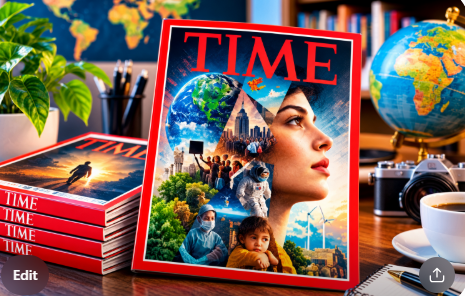
A TIME Magazine cover is far more than just the front page of a news publication. It serves as a striking visual summary of a person, landmark event, transformative idea, or global trend that the publication considers powerful enough to feature. Over the decades, every single TIME Magazine cover has carved its own place in the history of journalism, graphic design, and modern popular culture.
If you search for a TIME cover, you might be looking for a famous historical issue, the latest weekly release, the creative story behind a design, or an in-depth explanation of why these front pages hold such massive cultural weight. This comprehensive guide breaks down their history, visual style, and lasting significance in engaging and simple terms.
What Is a TIME Magazine Cover?
At its core, a TIME Magazine cover is the principal visual gateway placed on the front of every issue. It seamlessly combines the instantly recognizable red border and bold logo with a captivating photograph, painted illustration, expressive artwork, or conceptual graphic design.
Whether focusing on a world-renowned political leader, Hollywood celebrity, record-breaking athlete, groundbreaking scientist, pressing social debate, or global movement, the subject represents the heartbeat of current affairs. TIME itself notes that every TIME Cover covers diverse subjects spanning healthcare, sports, climate change, advanced technology, global business, arts, and world politics.
Beyond capturing raw attention on newsstands and digital feeds, a well-crafted TIME Magazine cover instantly delivers a clear, thought-provoking snapshot of the story waiting inside.
The Fascinating History of TIME Covers
The long journey began when TIME published its inaugural issue on March 3, 1923. That historic first edition featured Joseph G. Cannon, the retired Speaker of the U.S. House of Representatives. According to the publication’s official history, this initial layout laid the foundation for framing newsworthy individuals as the primary faces of global journalism.
However, the signature red frame didn’t appear immediately. Creative leadership highlights that the iconic border was introduced in 1926. This simple yet revolutionary branding decision quickly turned each TIME Magazine cover into an unmistakable visual symbol around the world.
As print technology and art styles evolved, so did the canvas of the publication. Early decades depended heavily on hand-painted portraits, fine sketches, and classic oil paintings. As mid-century culture shifted, the magazine began integrating full-color photojournalism, thematic collage, typography-driven art, digital illustrations, interactive infographics, and modern digital compositions.
Why Is the TIME Cover So Important?
The true power of a TIME cover lies in its rare ability to distill a highly complex, multi-layered news story into a single, emotionally resonant visual message. Long before opening the magazine or clicking an article, a reader immediately grasps the mood, tension, or significance of the topic through the TIME Magazine cover.
Design experts and editors frequently describe this front page as the most valuable single piece of real estate in modern journalism. Time and again, history proves that a powerful cover does not merely document events—it shapes public discourse, sparks global debates, and sometimes influences public opinion itself.
This unique cultural authority explains why a memorable issue continues to resonate in people’s minds decades after its newsstand debut.
How Is a TIME Cover Designed?
Designing a compelling issue is a deeply collaborative creative journey. It goes far beyond simply selecting a sharp photo. Behind every TIME Magazine cover, teams of top editors, investigative writers, photo directors, guest illustrators, and graphic designers work closely to determine the precise narrative tone.
Throughout history, the magazine has embraced a rich variety of artistic mediums, including:
- Painted Oil & Acrylic Portraits: Timeless, handcrafted fine art capturing historical personalities.
- Dramatic Photojournalism: Raw, unedited photography capturing high-stakes global moments.
- Conceptual Graphic Design & Maps: Minimalist typography, symbolic vector graphics, and geopolitical maps.
- Digital Art & Modern Renderings: 3D digital compositions tailored for today’s multimedia landscape.
Every subtle detail—from lighting, facial expressions, and background symbolism to bold headline typography—is intentionally crafted to reflect the core theme of the lead story.
Famous and Controversial TIME Magazine Covers
Throughout history, certain editions have gained legendary status precisely because they captured historical turning points or sparked intense global controversy.
Unveiled as part of the publication’s 100-year historical archive, several notable designs stand out as milestone moments in publishing:
- The 1966 “Is God Dead?” Cover: Marked by stark red text on a black background without any main image, this daring TIME Magazine cover triggered nationwide philosophical debates.
- Ellen DeGeneres’ 1997 “Yep, I’m Gay” Cover: A groundbreaking socio-cultural statement that transformed LGBTQ representation in mainstream media.
- The September 11, 2001 Special Issue Cover: Featuring a solemn black border instead of the signature red frame, this sorrowful TIME cover captured a grieving nation.
Over the decades, world-renowned artists have created original artwork specifically for the publication, including Andy Warhol, Roy Lichtenstein, Richard Avedon, James Nachtwey, Ai Weiwei, and Shepard Fairey.
TIME Cover Art as Historical Heritage
The front page of the magazine functions as both a piece of fast-paced journalism and a lasting work of visual fine art. By collaborating with legendary painters and photographers, each issue captures something deeper than a subject’s physical appearance—it captures their character and era.
Because of this lasting artistic impact, original artwork created for a TIME cover has been formally preserved in the permanent collection of the Smithsonian’s National Portrait Gallery. With over 2,000 original pieces archived, these cover works remain a recognized force in American visual art history.
How the Red Border Became Iconic
The signature red frame surrounding the front page is one of the most successful visual branding tools in publishing history. It creates immediate brand recognition, ensuring that no matter how radical or abstract the central artwork is, viewers instantly know what a TIME Magazine cover looks like.
This clever design framework gives the editors total creative flexibility. Whether featuring a minimalist text design, a satellite map, an abstract illustration, or a portrait, the bold red border binds the image directly to the magazine’s legacy.
Can You Find and Explore Old TIME Covers?
Yes, exploring historical editions is easier than ever. TIME maintains extensive digital archives and curated coffee-table books containing decades of historic front pages.
The official 100-year collection serves as an incredible resource for historians, designers, photographers, and journalists alike. It neatly categorizes every significant TIME Magazine cover by decade, offering rich background stories behind how pivotal world events were framed in real time.
What Makes a TIME Cover Truly Memorable?
The most unforgettable editions achieve a perfect harmony between a major historical moment and a bold visual concept. A great TIME cover is never passive; it is emotional, symbolic, thought-provoking, and often surprising.
Key elements that make a front page stand out include:
- Impeccable Timing: Releasing a powerful image at the exact peak of a breaking global story.
- Visual Simplicity: Using uncluttered composition so the main message hits instantly.
- Symbolic Depth: Embedding subtle visual metaphors into the artwork of the TIME Magazine cover.
- Artistic Courage: Taking creative risks that push beyond standard news photography.
TIME Covers in the Digital and Interactive Age
The way audiences experience the publication’s front page has transformed dramatically in recent years. In decades past, readers primarily discovered a new issue on physical newsstands, in libraries, or in home mailboxes. Today, millions encounter every new TIME Magazine cover instantly on social media, smartphones, and news feeds.
Digital innovation has expanded what a TIME cover can be. Modern creators now produce animated covers, motion graphics, interactive 3D designs, and augmented reality (AR) experiences.
Yet, despite shifting formats, the core mission remains unchanged: to deliver an unforgettable visual entry point into the defining stories of our time.
Frequently Asked Questions (FAQs)
What is the main purpose of a TIME Magazine cover?
The main purpose of a TIME Magazine cover is to introduce the lead topic of an issue using powerful visual storytelling that grabs reader attention and conveys complex ideas instantly.
When was the very first TIME cover published?
The first edition was published on March 3, 1923, featuring Joseph G. Cannon, the former Speaker of the U.S. House of Representatives.
When was the iconic red border introduced?
According to the creative design team, the signature red border was first introduced on a TIME cover in 1926.
Can I view past cover designs online?
Yes! TIME offers comprehensive digital archives, including its curated 100-year vault, allowing readers to browse historic front pages across different eras.
Why are these covers considered so famous?
A TIME Magazine cover combines exceptional artistic design with historic global events, turning individual magazine issues into lasting cultural and journalistic landmarks.
Final Thoughts
Ultimately, a TIME Magazine cover is far more than marketing for a weekly publication—it is a compelling artifact of modern history and visual culture. From its humble black-and-white origins in 1923 to today’s dynamic digital designs, every issue continues to capture the faces, debates, and moments that shape our world.
The enduring legacy stems from a unique fusion of rigorous journalism, artistic innovation, and timeless design. Whether you are analyzing graphic design trends, researching historical events, or simply appreciating iconic media art, exploring the archive of a TIME cover offers an unmatched lens into more than a century of human history.

2 Comments
Pingback: 7.What Channel Is Fox News on DIRECTV? Easy Guide
Pingback: 7.Mortgage News Daily: Reliable Rates & Market Updates