

If you have searched for “should that be the case NYT,” you are likely trying to understand the meaning of this phrase, how to use it in a sentence, or why it appears in connection with The New York Times (NYT) crossword puzzles and articles.
The expression “should that be the case” is a formal conditional phrase that means “if that is true” or “if that situation really exists.” It is used to discuss hypothetical conditions and their potential outcomes.
What Does “Should That Be the Case” Mean?
The phrase essentially translates to:
- “If that is the situation”
- “If that turns out to be true”
Example:
“Should that be the case, we will need to change our plans.”
Meaning: “If that is true, we will need to change our plans.”
This expression sounds more polished and professional than simply saying “if that is true,” which is why it frequently appears in journalism, academic writing, business correspondence, and formal publications like The New York Times.
Why Is “Should That Be the Case” Used?
English often uses inverted sentence structures in conditional statements to sound more concise or formal. In these cases, the word “should” replaces “if”, and the subject-verb order is flipped.
- Standard Condition: “If that is the case, we should reconsider the decision.”
- Inverted Condition: “Should that be the case, we should reconsider the decision.”
Both sentences convey the exact same meaning, but the second version elevates the formality of the statement.
“Should That Be the Case” vs. Other Phrases
While these expressions are functionally similar, their tone varies depending on the context:
| Phrase | General Meaning | Tone / Context |
| If that is the case | If that situation is true | Neutral / Standard |
| Should that be the case | If that situation is true | Formal / Professional |
| If that is true | If the statement is correct | Conversational |
| Should this happen | If this event occurs | Formal / Cautionary |
In casual everyday conversation, “if that’s the case” is standard. In journalistic or business writing, “should that be the case” offers a refined alternative.
Practical Examples in Sentences
Here are a few examples demonstrating how the phrase functions in context:
- Example 1: “Should that be the case, the company may need to reconsider its strategy.”(Meaning: If that situation is true, the company may need to adjust its strategy.)
- Example 2: “Should that be the case, please contact the office immediately.”(Meaning: If that turns out to be true, contact the office right away.)
- Example 3: “Should that be the case, further investigation may be necessary.”(Meaning: If that is confirmed, additional investigation will be required.)
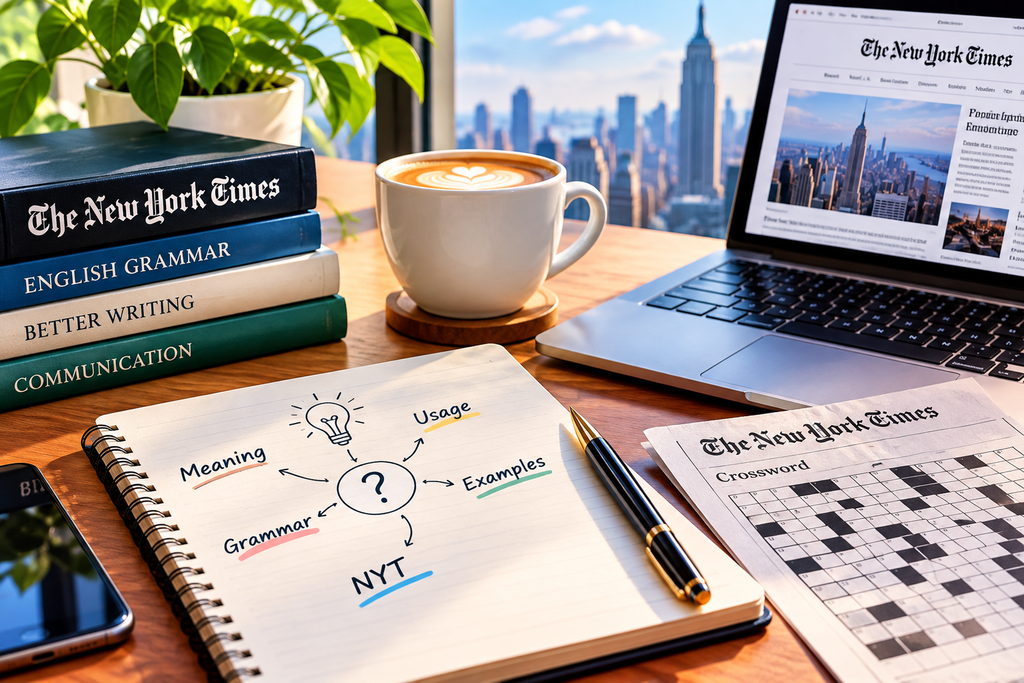
Is “Should That Be the Case” Grammatically Correct?
Yes, it is entirely grammatically correct. It uses an inverted conditional structure (also known as a formal conditional clause) where “should” replaces “if.”
Compare:
- “If you need assistance, contact us.”
- “Should you need assistance, contact us.”
Both are correct, but the inverted form with “should” is preferred in formal or cautious communication.
What Does “NYT” Mean in This Search?
In searches for “should that be the case NYT,” the abbreviation NYT stands for The New York Times.
Users usually search this combination for two main reasons:
- NYT Crossword Clues: The phrase often appears as a clue in the NYT Crossword or NYT Mini Crossword, where the required answer is typically a shorter synonym such as “IF SO” or “IF TRUE”.
- Editorial Style: Readers notice the phrase in NYT news reports or opinion pieces and want to clarify its exact meaning in context.
Is It Common in Everyday English?
While grammatically sound, “should that be the case” is rarely used in casual spoken English. In day-to-day conversations, native speakers generally prefer simpler phrases:
- “If that’s true…”
- “If that’s the case…”
- “If so…”
However, for professional emails, formal reports, news articles, and academic papers, it remains an excellent stylistic choice.
